
Creating Room to Breathe Through a Softer Approach to Massage for Endometriosis
Your body has been working overtime for a long time now.
Endometriosis pain doesn't just live in one place. It radiates, it lingers, it shows up in your hips and your lower back and the muscles that have been quietly bracing for months. The condition itself is medical. But the body's response to long-term pain, the tightness, the guarding, the nervous system running hot, that part is something massage can actually reach.
Not as a treatment. As relief for what accumulates around it.
Massage for endometriosis won't change your diagnosis or touch the lesions. What it can do is work with the layers of tension that build up over time in a body that's been under pressure for too long. That distinction is worth sitting with before you decide whether to book anything.
Can Massage Help with Endometriosis Pain?
The short answer is: it depends on what kind of pain you're dealing with.
Endometriosis lesions are not something massage can reach or change. What massage can address is everything that happens around the pain. The muscles that tighten in response to repeated discomfort. The hips that carry extra tension. The nervous system that's been on high alert for months. The jaw that clenches without you realizing.
Research is still growing in this area, but some studies suggest that massage therapy may reduce pelvic pain and improve quality of life for people with endometriosis. A small study published in Complementary Therapies in Clinical Practice found that self-administered abdominal massage reduced dysmenorrhea (painful periods) compared to a control group. That's promising. It's also not a medical endorsement, and it doesn't mean every massage technique is appropriate.
The goal here isn't to promise anything, but to help you figure out whether massage makes sense as one piece of your care.
What Type of Pain May Massage Support?
Endometriosis pain tends to spread beyond its source. Over time, the body compensates, and that compensation shows up in places that have nothing to do with lesions.
Pelvic Pain and Lower Abdominal Tension
Pelvic pain is rarely just one thing. There's the endometriosis itself, and then there's the body's response to that pain over time. Muscles in the lower abdomen, inner thighs, and pelvic floor can become chronically guarded, meaning they hold tension constantly, even when nothing is actively happening.
Gentle pelvic pain massage for endometriosis may help ease that secondary layer of muscle tension. It's not treating the lesions. It's working with a body that has been protecting itself for a long time.
Lower Back and Hip Discomfort
The hips and lower back often carry a lot when the pelvis is under stress. Referred pain, compensatory posture, and tightened glutes and hip flexors are common in people with endometriosis. Massage therapy in these areas can bring real comfort, especially during non-flare periods when the body is more receptive to touch.
Stress, Guarding, and Muscle Tightness
Chronic pain changes how the nervous system works. The body learns to anticipate discomfort and tightens preemptively. This is called guarding, and it can make everyday movement feel heavier than it should. Massage helps by signaling to the nervous system that it's safe to release some of that held tension. It's a slow process, and it's most effective as part of a consistent care routine.
How Massage May Support Endometriosis Symptoms
The support is always cumulative, and it works through the body's own responses to sustained, gentle attention.
Relaxing Tense Muscles Around the Pelvis
When pain is ongoing, the surrounding musculature adapts. The body pulls inward. Breathing shallows. Posture shifts. Targeted massage work around the hips, sacrum, lower back, and abdomen (when appropriate) can help interrupt that tension pattern. Sessions focused on this area should always be gentle, slow, and fully guided by your comfort level.
Supporting Circulation and Comfort
Massage increases local circulation and may help reduce the sensation of heaviness or congestion in the lower abdomen. This is one reason some people find abdominal massage therapy most useful in the days before or after a period, rather than during active cramping. Timing and pressure matter a great deal.
If this sounds like the kind of care your body has been asking for, you can book a massage therapy session at Marea in Griffintown and walk in with exactly what you need us to know.
Helping the Nervous System Settle
Reproductive health massage, in the broader sense of bodywork that considers pelvic comfort and stress response, often works at the level of the nervous system rather than the tissue. A body that feels held, warm, and safe during a massage session often continues to carry some of that ease afterward. It's not magic. It's physiology. Parasympathetic activation during massage genuinely reduces cortisol and may lower pain sensitivity.
What Is Abdominal Massage Therapy?
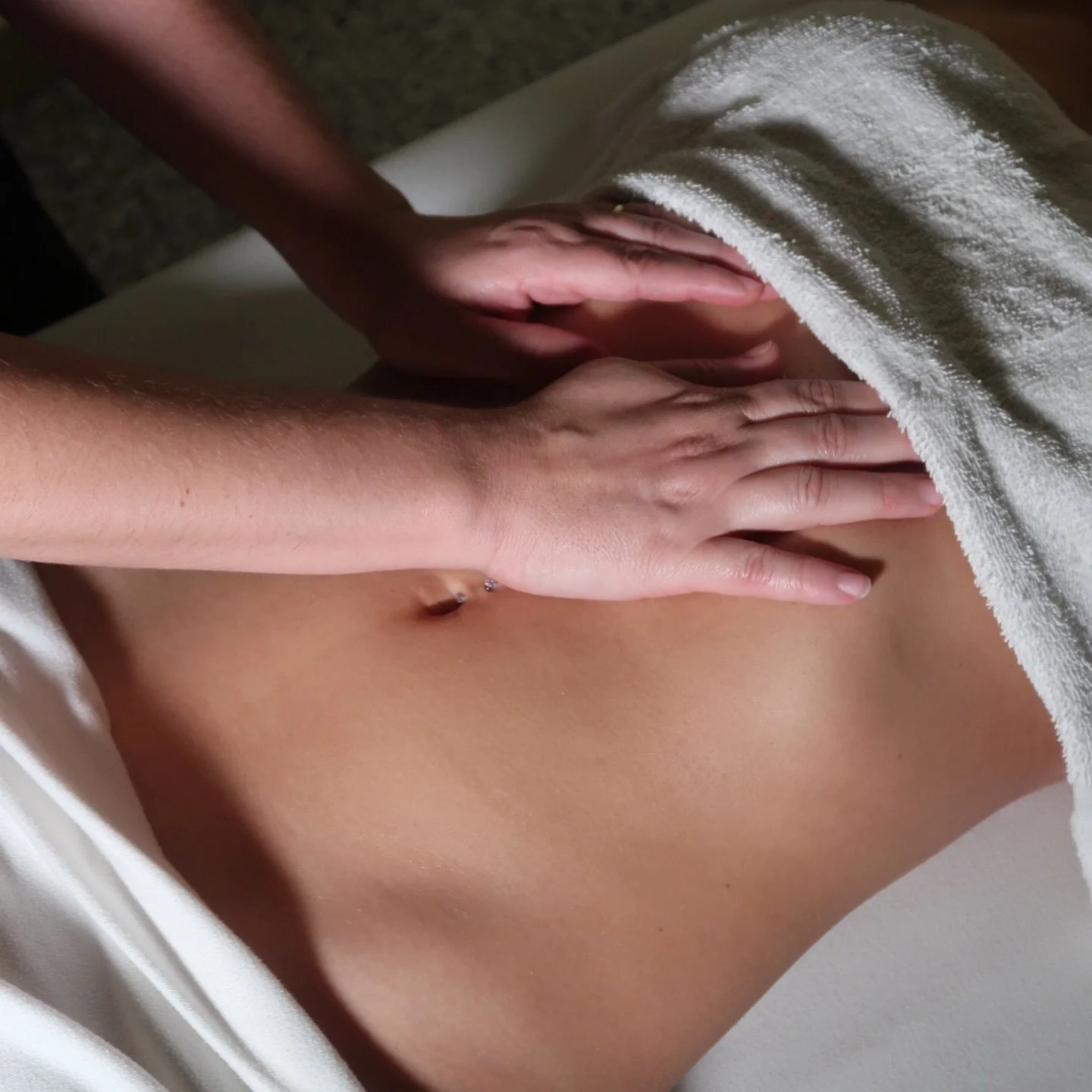
Abdominal massage therapy refers to gentle, external massage of the abdomen. When performed by a trained therapist who understands pelvic health, it can address tension in the muscles and connective tissue of the abdominal wall.
It is not an internal technique. It does not involve going inside the body in any way. Good abdominal work is slow, pressure-adaptive, and consent-driven. Your therapist should check in constantly and adjust based on your feedback.
This type of work is generally avoided during active flares, immediately following surgery, or when there is unexplained new pain, fever, heavy bleeding, or any symptom that has not been evaluated by a doctor.
Is Massage for the Pelvic Floor the Same Thing?
No, and this is an important distinction.
Massage for pelvic floor dysfunction, especially internal pelvic floor work, falls under the scope of a pelvic floor physiotherapist. This is specialized care that involves internal assessment and treatment of the pelvic floor muscles. A general massage therapist, regardless of how skilled, should not be performing internal pelvic floor techniques.
What a massage therapist can do is work externally on the muscles around the pelvis, the hips, the sacrum, and the abdomen, in ways that support pelvic comfort. If you're dealing with significant pelvic floor dysfunction alongside endometriosis, a referral to a pelvic floor physiotherapist is the more appropriate first step.
Both can be part of your care. They're just different tools.
Benefit from Massage for Endometriosis
Most people aren't looking for a solution, rather something that makes the harder days a little more manageable.
Ease Muscle Tension Around Pain Flares
Many people find that massage is most useful between flares rather than during them. In those quieter windows, the body is more open to releasing held tension. Consistent sessions during lower-pain periods can help reduce the baseline of tightness that builds over time.
Help with Stress-Linked Tightness
Stress and pain feed each other. When stress levels go up, pain sensitivity often follows. A regular massage for endometriosis can help interrupt that cycle, not by eliminating the stress, but by giving the body a space to genuinely rest. Over time, that has real value.
Support Between Medical Treatments
Massage works best as a complement to medical care, not a replacement for it. If you're working with a gynecologist, taking hormonal medication, or preparing for or recovering from surgery, massage can fill the gaps in between. It supports comfort, sleep, mood, and physical ease in ways that matter for overall wellbeing.
What to Tell Your Massage Therapist Before the Session
The more your therapist knows coming in, the more useful the session becomes.
Diagnosis or Suspected Condition
Let your therapist know if you have an endometriosis diagnosis or if you're currently being evaluated. This changes how they approach the session, especially around abdominal and pelvic work. A good therapist will adapt. They need this information to work safely with you.
Pain Location and Pressure Limits
Be specific about where you hurt, where you don't want to be touched, and how much pressure feels okay. You don't have to use clinical language. Saying "my lower left side is off-limits today" is enough. Your therapist will follow your lead.
Comfort Level with Abdominal Work
Some people with endometriosis find abdominal touch helpful. Others find it activating or uncomfortable. There's no right answer. If you want to try gentle abdominal massage therapy, say so. If you'd rather avoid it entirely, that's completely valid. A good session is built around what works for your body on that particular day.
FAQs
Can massage cure endometriosis?
No. Massage does not treat, reverse, or cure endometriosis. It may help with the muscular tension, stress response, and physical discomfort that accompany the condition, but it does not affect the lesions themselves. Medical care from a gynecologist remains essential.
Is abdominal massage safe for endometriosis?
Gentle, external abdominal massage may be appropriate for some people with endometriosis, but not all. It should be avoided during active flares, recent surgery recovery, or when symptoms are unexplained or worsening. Always inform your therapist of your condition and consult your doctor if you're unsure.
Can massage help pelvic floor pain?
External massage around the hips, sacrum, and pelvic region may help ease tension related to pelvic discomfort. For pelvic floor dysfunction specifically, a pelvic floor physiotherapist is the more appropriate provider for internal assessment and treatment.
Should massage hurt if I have endometriosis?
No. Massage should not cause pain, especially for someone with pelvic sensitivity. Mild pressure sensation or the feeling of a muscle releasing is normal. Actual pain is not. Speak up immediately if anything feels wrong. A skilled therapist will adjust without hesitation.
How often should I get massage for pelvic pain?
This varies from person to person and depends on your pain levels, stress, and overall care plan. Some people benefit from sessions every two to four weeks. Others come in monthly. Starting with one session and discussing a rhythm with your therapist is a reasonable approach.
You've Earned a Session That's Built Around You
Endometriosis asks a lot of the body, day after day. Finding the right support, layers of it, is part of learning to live well alongside it.
If a gentle, informed massage session sounds like something your body could use right now, reach out and book a massage therapy session. Before your appointment, take a moment to write down your symptoms, the areas you want avoided, and how much pressure generally feels okay for you. Bringing that information into the room makes the whole experience safer and more useful.
When you're ready, we're here. Book a massage therapy session in Griffintown and let your therapist know where you're at, physically and otherwise, before the session begins.
Your comfort and your boundaries come first. Always.