A Definite Guide to Different Massage Techniques (So You Know How to Book the Right One)
Most people walk into a massage not knowing what they need. They just know something hurts, or they're tired, or they've been carrying stress in their shoulders for three weeks straight. So they pick whatever sounds relaxing and hope for the best.
That works sometimes. But knowing a little about different massage techniques before you book? That changes the whole experience. You walk in with clarity. You leave feeling like the session was made for you, because it was.
Here's a straightforward breakdown of what the techniques actually are, what they feel like, and how to match them to what your body is asking for right now.
What's the Difference Between a Massage "Style" and a Massage "Technique"?
This trips a lot of people up, and honestly, the distinction is worth knowing.
A technique is the actual hand movement. The stroke, the motion, the mechanical action a therapist uses on your muscle tissue. Think of it like vocabulary. Effleurage, petrissage, friction; these are specific moves with specific purposes.
A style is the full approach. It's the language built from those words. Swedish massage is a style. Sports massage is a style. Each one draws from a set of techniques, organized around a goal, a rhythm, a pressure level.
So when someone asks what are the different massage techniques, they might mean either. This guide covers both, because understanding one helps you understand the other.
The Core Techniques: What Therapists Are Actually Doing With Their Hands
Before we get into styles, here are the foundational movements that show up across most massage sessions.
Effleurage
Long, slow, gliding strokes that follow the contour of the body. This is usually how a session starts and ends. It warms up the tissue, calms the nervous system, and gives the therapist a chance to feel where tension lives. For you, it just feels like a wave moving through the body.
Petrissage
Kneading, rolling, squeezing. Like bread dough, if bread dough had chronic tension from sitting at a desk. This technique works deeper into the muscle belly and helps break up adhesions, improve circulation, and release that deep, aching tightness.
Friction
Small, circular or transverse pressure applied to a specific spot. This is targeted work. Therapists use friction to address scar tissue, knots, and areas where muscle fibers have bundled together in ways they shouldn't. It can feel intense for a second, then releasing.
Tapotement
Rhythmic tapping, cupping, or chopping motions. Stimulating and invigorating. This shows up more in sports massage and certain energizing treatments, less so in deep relaxation work.
Vibration
Fine trembling or oscillating movements. This one's subtle, but effective for loosening tight areas and calming nerve tension. You might barely notice it while it's happening, but the body responds.
Different Types of Massage Techniques by Goal
This is where it gets useful. Because the technique matters less than why you need it.
For Deep Relaxation: Swedish and Holistic Massage
Swedish massage is the foundation of relaxation massage. It uses a combination of effleurage, petrissage, and light friction to bring the nervous system down. Long, fluid strokes. Gentle to moderate pressure. The kind of session where your mind goes quiet about 15 minutes in.
Holistic relaxation massage works in a similar direction but with more intention placed on the whole person, not just the physical tension. The rhythm, the flow, the presence of the therapist, all of it is calibrated to help you actually decompress, not just get rubbed.
Best for: High stress, poor sleep, feeling scattered or emotionally heavy, need a full reset.
For Targeted Pain and Tension: Therapeutic and Deep Tissue
These are the different back massage techniques most people are thinking about when their lower back has been screaming at them for two weeks.
Deep tissue work uses slower, more deliberate pressure to get into the deeper layers of muscle and connective tissue. It addresses chronic tension patterns, not just surface-level tightness. It's not about pain tolerance; a good therapist works with your feedback and your tissue, not against it.
Therapeutic massage as a category means the session has a specific clinical goal. Your therapist assesses, adapts, and treats. It could mean addressing postural issues, managing a repetitive strain injury, or supporting recovery from something more specific.
Best for: Chronic muscle pain, tension headaches, postural problems, desk-related stiffness, injury recovery support.
For Recovery and Performance: Sports Massage
Sports massage pulls from several techniques depending on the timing: pre-event, post-event, or maintenance. Before activity, it tends to be faster and stimulating. After, it shifts to flushing and recovery-focused work.
This is one of the different wellness massage techniques that works well even if you're not an athlete. Anyone with a physically demanding job, a training routine, or recurring muscle fatigue can benefit.
Best for: Active people, gym-goers, those recovering from overuse, performance support.
For Circulation and Swelling: Lymphatic Drainage Massage
This one is gentler than people expect. The lymphatic system sits close to the surface, so the pressure is light and rhythmic. The goal is to encourage fluid movement, reduce puffiness, and support the body's natural filtration process.
Commonly recommended post-surgery or post-injury
Helpful for people experiencing water retention or swelling
Often incorporated during prenatal care or recovery phases
Best for: Post-operative support, inflammation, immune support, pregnancy-related swelling (with appropriate clearance).
For Warmth and Release: Hot Stone Massage
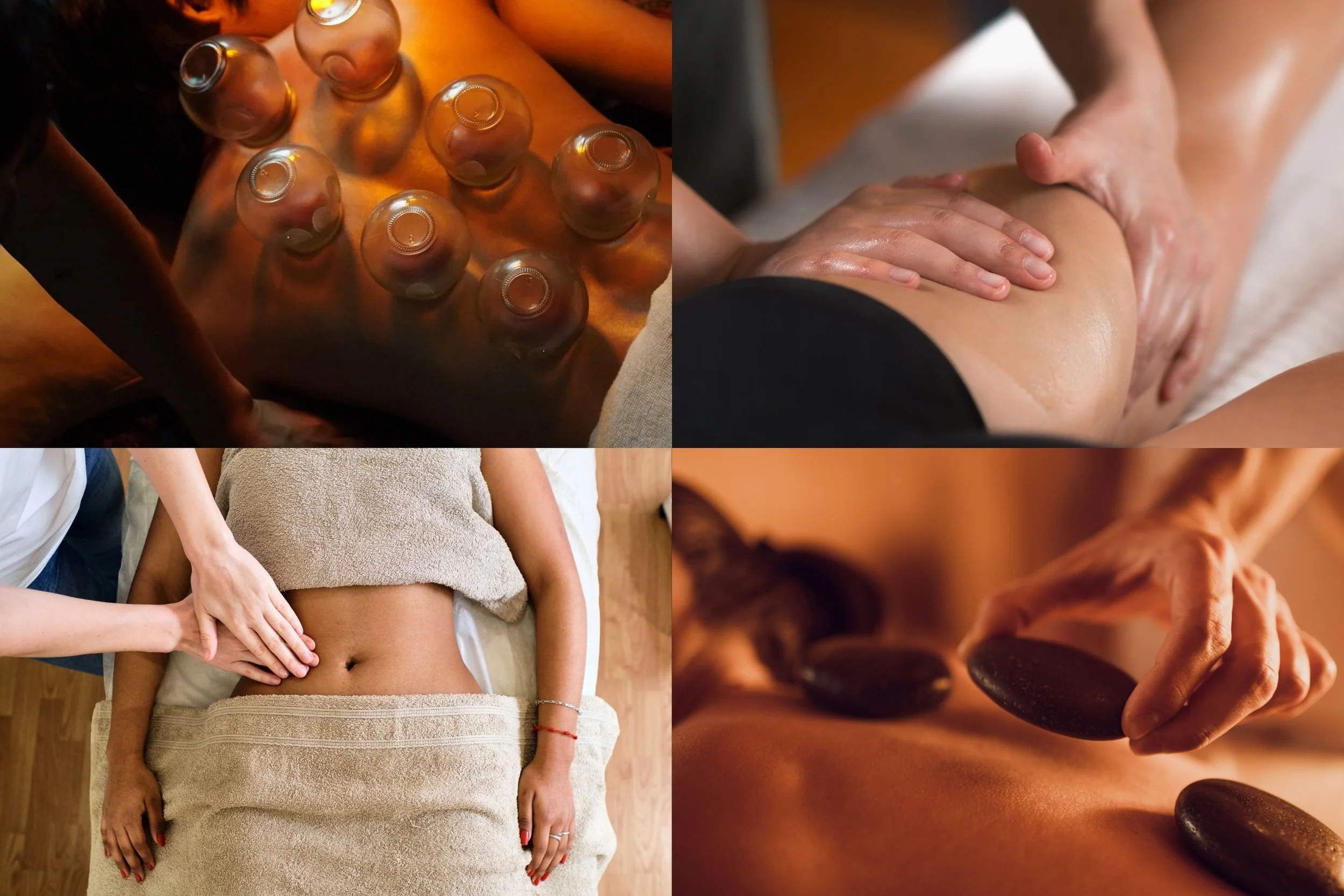
Smooth, heated stones are used to warm and soften muscle tissue before or alongside hands-on work. The heat reaches deeper than hands alone can, and there's something grounding about the weight and warmth of stone against muscle.
It's not just a luxury add-on. The thermal element makes it genuinely easier to release deep tension without the same pressure intensity of deep tissue work.
Best for: Cold-sensitive muscles, chronic stiffness, those who find deep pressure too intense but need more than surface work.
For Tension Release and Detox Support: Cupping Massage
Suction cups create negative pressure on the skin and underlying tissue. Instead of pushing into the muscle, they pull, lifting and separating layers of fascia. It can leave marks that look dramatic but typically resolve within a few days.
People who've had it describe a strange, almost pleasant stretch from the inside. It's deeply effective for releasing stuck tissue and improving local circulation.
Best for: Fascia restriction, chronic back and shoulder tension, areas that don't respond well to direct pressure.
For Expecting Mothers: Prenatal Massage
Prenatal massage adapts positioning, pressure, and technique to the specific needs of pregnancy. The goal is comfort, circulation support, and relief from the very real physical demands that come with growing a human.
Certified therapists trained in prenatal work know what to avoid and how to support the body safely at each stage.
Best for: Pregnant clients looking for safe, targeted relief from back pain, swollen legs, and tension.
For Surgical Recovery: Post-Surgical Massage
This is a highly specific, clinically guided approach for clients in a recovery process following surgery. Technique selection here prioritizes scar tissue management, circulation, and the reduction of post-operative swelling and adhesion.
Best for: Post-surgical recovery, under therapist and physician guidance.
Different Facial Massage Techniques: What's Happening on the Skin Level
Facial massage is its own world. The different facial massage techniques used in therapeutic and aesthetic treatments vary significantly from what's done on the body, because the tissue, the goals, and the anatomy are all different.
Sculpting and Gua Sha Techniques
Gua sha applied to the face uses a smooth-edged tool to glide along facial contours, stimulating lymph flow and contouring the jaw, cheekbones, and brow area. Glass cupping on the face creates gentle suction to lift and firm.
The Sculpting Facial at the center combines both of these in a single session.
Buccal (Intraoral) Massage
This is exactly what it sounds like. The therapist works from inside the mouth to release the masseter, pterygoid, and other deep facial muscles that hold an enormous amount of tension — especially for people who clench their jaw, grind their teeth, or carry stress in their face.
From outside it can look strange. From inside the session, it feels like something you didn't know you needed being unlocked.
Microneedling as Skin Technique
Microneedling creates controlled micro-perforations in the skin to stimulate collagen and elastin production. In the context of facial treatments, it's used for texture, tone, fine lines, and scar reduction. Combined with other facial techniques in treatments like Glass Perfection, it amplifies results.
How to Know Which Session to Book
The honest answer: you don't always have to know in advance. That's part of what a good intake process is for.
At Griffintown's therapeutic center, each client gets matched to a style based on their goals, not a menu they pick from blindly. The two care families, holistic relaxation and therapeutic, act as the starting point. Your therapist takes it from there.
A few general starting points:
Stress and fatigue with no specific injury → Relaxation massage, hot stone, or holistic approach
Chronic pain, specific tension area, postural issues → Therapeutic, deep tissue, or sports massage
Recovery support or fluid/swelling concerns → Lymphatic drainage
Pregnancy → Prenatal massage, confirmed with your provider
Facial concerns (tension, skin quality, contouring) → One of the signature facials, including options with Gua Sha, buccal technique, or microneedling
FAQs
Do I need to know which technique I want before booking?
No. The therapists guide that conversation. What helps is knowing your goal: relaxation, pain relief, recovery, or skin care.
How long is a session?
Sessions run 60, 90, or 120 minutes. Longer sessions allow for broader coverage or more detailed therapeutic work.
Are all therapists certified?
Yes. Every practitioner is a certified massage therapist and a member in good standing of professional massage therapy associations.
What's the cancellation policy?
Full refund with 24 hours' notice. Less than 24 hours or no-show: no refund. Payment is required in advance.
Do you offer couple's massages?
Yes, 60-minute couple sessions are available. Contact the center directly to choose your therapists.
Book the Session That Fits
Understanding the different massage techniques out there is step one. Step two is trusting that the right session isn't something you have to figure out alone.
Sessions are bookable at Centre Thérapeutique Griffintown, located at 1195 rue Wellington, local 203 in Griffintown, Montreal. Visit centretherapeutiquegriffintown.com to see availability and lock in your time.