
What Your Massage Therapist Should Know After a Gym Break
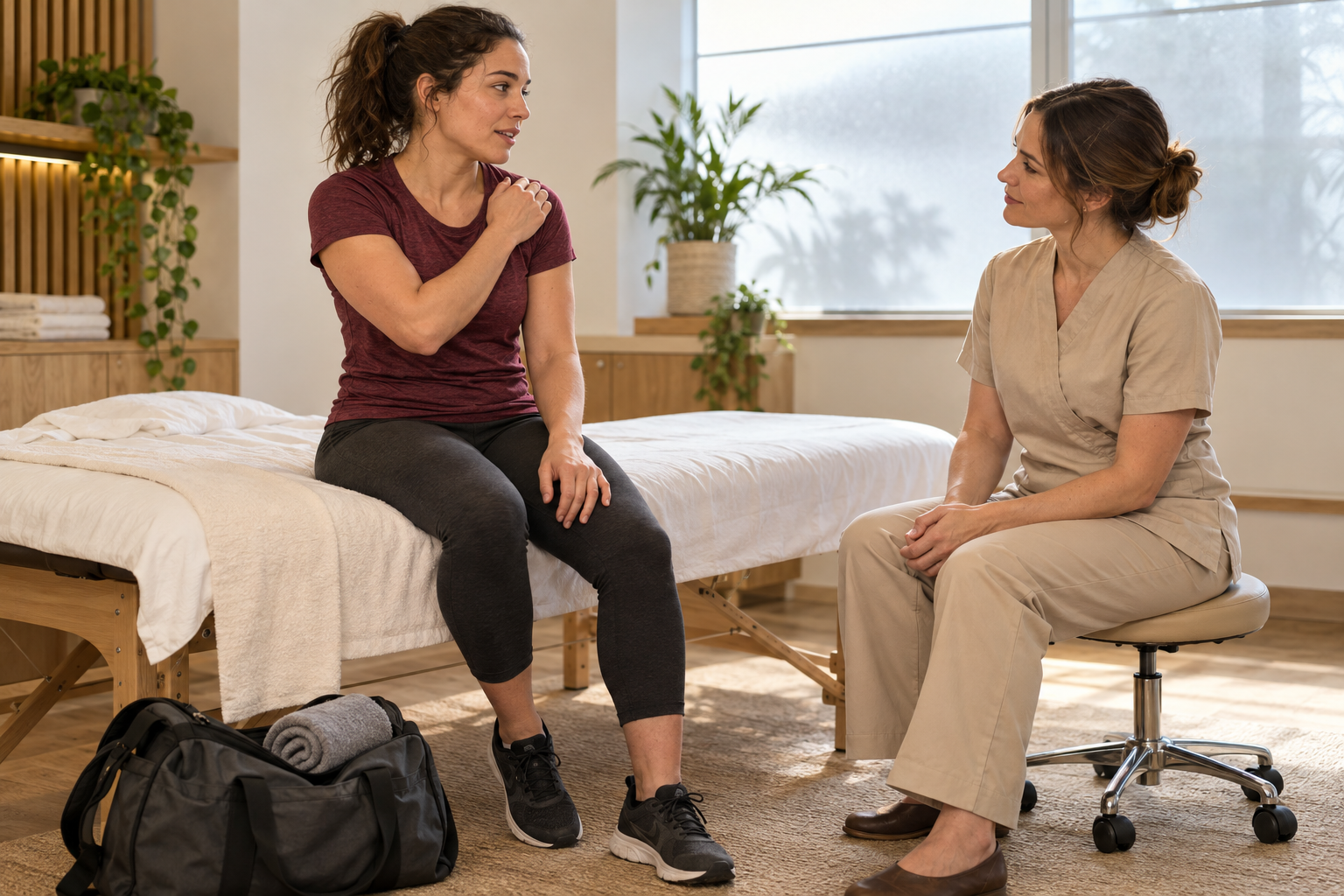
Going back to the gym after a break can make familiar exercises feel unfamiliar again. Even if you are easing in, your body is responding to a workload it has not had for a while.
A sports massage after returning to gym starts there.
Tell your therapist how long you were away, what you have started doing again, which areas feel different from usual, and whether any soreness is settling or becoming more noticeable.
You do not need to arrive with a diagnosis or a perfect recap of every workout. A clear sense of what changed gives your therapist useful information when deciding where to focus and how to approach the session.
Start With What Changed Since Your Last Training Routine
After time away, the useful story is usually the difference between your old routine and your current one.
Perhaps you have returned to squats with less weight. Maybe you are lifting twice a week instead of four times. You may have changed exercises, shortened your sessions, trained less often, or added movements that you had stopped doing before the break.
Those details give your therapist context. At Centre Thérapeutique Griffintown, massage care is personalized, and the therapist can adjust the style and pressure to the needs you bring into the room.
A useful recap can cover four points:
● how long your break lasted
● what exercises or activities you have restarted
● which areas feel different from your usual baseline
● whether those sensations are easing, staying similar, or becoming more noticeable
You can keep it simple. A useful sentence links the length of the break with what you resumed and what feels different now, without asking you to name a muscle or explain the cause yourself.
Sports Massage After Returning to Gym Starts With Your Current Load
Your previous training level may still feel like the obvious reference point. For session planning, your current load can be more useful.
Tell your therapist how often you have trained since returning and what exercises you resumed. Add what changed in the first few sessions and which movements seem to leave an area more noticeable afterwards. If one side feels different from the other, mention that too.
This is especially useful when the exercises themselves are familiar. A familiar movement can still represent a different demand after several weeks or months away.
For someone booking a massage after weight training, that changed demand is often more informative than the name of the workout alone.
What Your Therapist Needs To Know About Soreness
Soreness can be difficult to describe, especially when you are unsure what counts as “normal” after returning to exercise.
You can describe what you notice without deciding what it means. Say where you feel it, when you first noticed it, what movement brings it to your attention, and whether it is settling or becoming more noticeable.
That gives your therapist a clearer picture of your experience while keeping the conversation within the scope of massage therapy.
If you have a new concern that feels outside your usual post-exercise experience, say so before the session begins. Your therapist can use that information when deciding how to approach the appointment and whether an area should be treated differently.
A Return-To-Training Intake Can Be Short
You do not need a training diary. A few concrete details are usually enough to begin the conversation.
| What to Share | A Useful Way to Describe It |
|---|---|
| Time away | “I stopped training for about ___.” |
| What restarted | “I have started doing ___ again.” |
| What changed | “This feels different from before the break: ___.” |
| Pattern | “I notice it most when ___.” |
| Direction | “It seems to be easing / staying similar / becoming more noticeable.” |
This is the kind of information that can help shape the focus of a sports massage after returning to gym without turning the appointment into a test of how well you remember your training.
If you want to see how our massage care is structured before booking, our guide to massage therapy explains the therapeutic and sports massage options available.
Sports Massage For Beginners Does Not Require Sports Expertise
The phrase sports massage for beginners can sound as though you need to arrive with training terminology ready. You do not.
Our sports massage service is intended for athletes and active people. If you are returning to the gym after time away, being able to explain what you resumed and what now feels different gives the therapist a practical starting point.
You can also speak up about pressure during the session. Our massage care is personalized, and the technique and pressure can be adjusted to your needs.
What To Leave Out Of The Guesswork
It is easy to arrive convinced that a certain muscle is the problem, especially after searching symptoms or comparing notes with someone at the gym.
You can share your own theory if it helps explain what you have been noticing. You can also leave room for the therapist to ask questions and decide how to work within the session.
The more useful information is often concrete: what you did, what changed, what you feel now, and how that feeling has behaved since your return.
That keeps the session centred on your current experience rather than on trying to recreate your old training routine immediately.
When Sports Massage After Returning to Gym Needs A Different Conversation
A return from a break can include ordinary uncertainty. You may be wondering whether a sore area is simply more noticeable because the workload is new again.
If the sensation is becoming more noticeable rather than settling, tell your therapist clearly. If you are concerned that you may have an injury or a medical issue, seek guidance from an appropriate health professional rather than relying on massage therapy to diagnose it.
Massage therapy can be planned around the information you share. It should not be used as a substitute for medical assessment when you need one.
Frequently Asked Questions
What should I tell my therapist before my first session back?
Share how long you were away, what you have restarted, which areas feel different from your usual baseline, and whether soreness is easing or becoming more noticeable.
Do I need to choose the exact massage style before I arrive?
No. Our massage therapy page explains that if you are unsure, your therapist can adjust the technique and pressure based on your needs.
Is sports massage only for competitive athletes?
No. Our sports massage service is described for athletes and active individuals, so you do not need to compete or train at an advanced level.
Can I ask for the pressure to be changed during the session?
Yes. Our approach is personalized, and the therapist can adjust pressure and technique to suit your needs.
What should I bring to my first massage appointment?
Bring valid photo ID and the card used for payment. Our site also asks first-time clients to arrive 10 to 15 minutes early to complete a health form.
Can I get an insurance receipt for sports massage?
An official massage therapy receipt can be issued on request. Reimbursement depends on your own insurance plan, so check your coverage with your insurer.
Let The Session Reflect Where Your Training Is Now
Returning to exercise can bring a mix of familiarity and uncertainty. You may remember exactly how an exercise should feel while your body is still adapting to doing it again.
A sports massage after returning to gym can begin with a simple conversation about that change. Bring the version of your training that exists now, including what feels comfortable, what feels different, what feels familiar, and what you are still figuring out.
When you are ready, you can review our massage therapy options and choose an appointment that fits your return to training.