
Desk Worker Massage in Montreal for Office-Weary Bodies
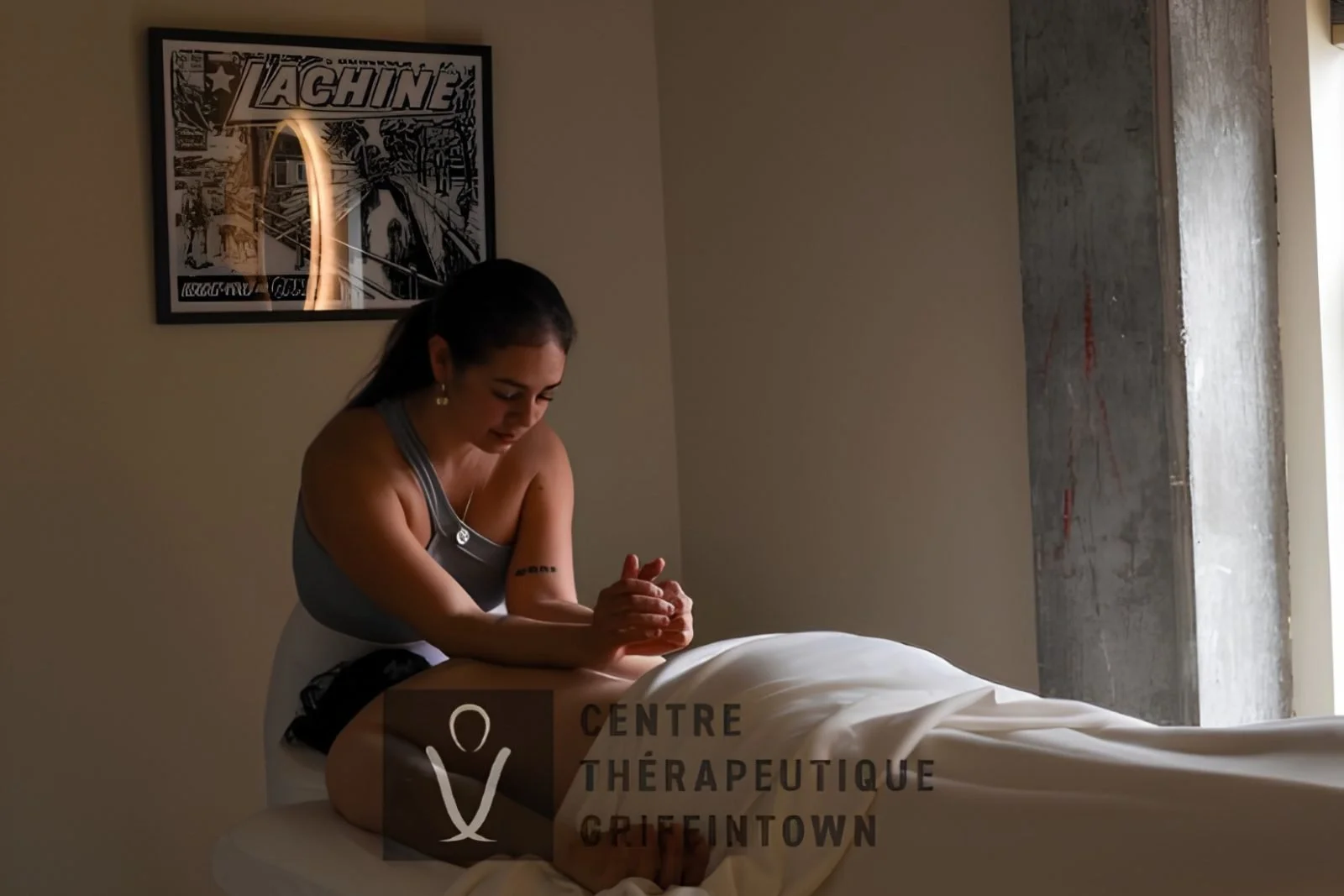
By late afternoon, a laptop-heavy day can settle into the neck and shoulders, while a hybrid week may leave the back or hips feeling involved too. For desk-related tension, 60 minutes tends to suit a focused session, while 90 minutes gives more room when several areas need attention.
Think of session length as a question of scope.
If your office tension feels concentrated, a therapist can prioritize the areas that feel most relevant that day. If the neck, jaw, back, and hips all need time, a longer session gives each area more space without assuming every region needs the same approach.
That difference can feel familiar in Griffintown, where a workday may move between the office and home. Someone describing work from home back pain may arrive with a different pattern from someone whose neck and shoulders feel tight after a full day at a desk.
What Changes Between 60 and 90 Minutes?
At Centre Thérapeutique Griffintown, massage sessions are offered in 60, 90, and 120 minutes. Our massage therapy information also explains that longer sessions allow broader coverage or more detailed therapeutic work.
For desk-related tension, that makes the choice less about finding a universally better length. It is more useful to decide how many areas you want to give meaningful time to.
| What You Want to Prioritize | What 60 Minutes Can Allow | What 90 Minutes Can Add |
|---|---|---|
| Neck and shoulders | A more focused upper-body session, depending on your intake and comfort | More room to include related areas without moving through them as quickly |
| Back and hips | Time can be concentrated where you feel the main restriction | More room for broader back and hip work when both feel involved |
| Several desk-related areas | Your therapist can help you choose priorities | Extra time can make broader coverage more realistic |
| Relaxation plus targeted work | The session may lean more strongly toward one goal | More time can allow both goals to share the appointment |
Our therapists personalize the session rather than applying one fixed format. If you are unsure how to use the time, you can begin by describing what feels most noticeable and what you want from the appointment.
You can review our massage therapy sessions before choosing a length.
When One Area Is Clearly Asking for Attention
Consider a laptop-heavy office day where the main concern is concentrated around the neck and shoulders. You may also notice that you have been clenching your jaw or carrying tension through the upper back, but one region still feels like the clear priority.
In a 60-minute session, the useful conversation is about focus. You can tell your therapist where the tension feels strongest, how long it has been noticeable, what pressure feels comfortable, and whether anything has recently changed.
A focused hour does not need to cover every area equally. Our site describes therapeutic massage as targeted care for pain or muscle tension, with the massage style adapted to the person in front of us.
If your search for desk worker massage Montreal started because one area keeps drawing your attention after work, 60 minutes may give you enough room to centre the session on that priority.
What the Extra Half Hour Gives You
Now consider a hybrid week. Your neck feels tight after a long screen block, while your back and hips have also become part of the picture after moving between a home setup and the office.
A 90-minute session gives the therapist more time to work across several areas or spend longer on detailed therapeutic work. That broader scope is the clearest difference our own service information makes between shorter and longer appointments.
This can be useful when you do not want to choose between upper-body attention and the back or hips. It can also leave more room for check-ins about pressure as the session moves from one region to another.
The extra time still does not create a fixed recipe. Your therapist can adjust the session based on what you report, how your body responds, your comfort with pressure, and the goals you agree on at the start.
For someone comparing a 60 vs 90 minute massage, that extra half hour is best understood as more room to work with the full picture.
Office Tension Rarely Stays in One Place
Desk-related discomfort does not always arrive according to a neat schedule. The table below is an illustrative workweek, rather than a clinical timeline or a prediction of how your body should feel.
| Day | Laptop-Heavy Office Pattern | Hybrid-Work Pattern | What to Bring to the Consultation |
|---|---|---|---|
| Monday | Neck or shoulder tension may be the main thing you notice | The body may feel different after a weekend with more movement | Where you notice tension first |
| Tuesday | Longer screen blocks may make one upper-body area more noticeable | A home setup may shift attention toward the back or hips | Which area feels most distracting |
| Wednesday | You may notice whether the same area keeps returning | Changing workstations may make the pattern feel less predictable | What has changed since the start of the week |
| Thursday | Several areas may begin competing for attention | Neck, shoulders, back, or hips may all feel relevant | Which areas you would prioritize if time is limited |
| Friday | You may simply feel ready to step away from the workday | You may want a broader session after moving between setups | Whether you want focused work or broader relaxation |
This kind of check-in can make a 60 vs 90 minute massage decision easier. You are giving the therapist a picture of your week rather than trying to diagnose the reason yourself.
When Work From Home Back Pain Joins the Picture
Work from home back pain can be frustrating because the discomfort may shift as your setup changes. A home workstation and a day back at the office can ask different things of how you sit and move.
If the back is the clear priority, a 60-minute appointment can be organized around that concern. If the hips, neck, shoulders, or upper back are also asking for time, 90 minutes can provide more room to address a wider set of priorities.
Our lower-back guidance also makes an important distinction. Severe pain, pain that travels down the leg, numbness, tingling, or leg weakness should be assessed medically before massage.
That boundary is worth keeping clear. Massage therapy can be adapted for muscular tension and comfort, while unexplained or neurological symptoms need the right clinical assessment.
What Helps Us Plan a Neck and Shoulder Session in Griffintown
You do not need a polished explanation of your symptoms before an appointment. A few concrete observations can help your therapist understand what you want from the session.
People sometimes arrive after searching a phrase like “neck shoulder massage Griffintown,” but the conversation in the room becomes much more personal. Where do you feel it, what makes it more noticeable, what has changed, and what would you like us to prioritize?
Jaw tension is also worth mentioning if you notice clenching during focused work. Your therapist can tell you whether it is relevant to the session and what falls within their scope.
Pressure can be adjusted during treatment. Our own guidance encourages clients to say what feels productive and what feels painful so the therapist can respond in real time.
What We Want to Know Before We Begin
A useful consultation gives you room to describe your goal without having to label the cause. The therapist can then decide how to organize the time within their professional scope.
Questions may include where you feel tension, what makes it more noticeable, whether you have an injury or health condition they should know about, and how you tend to respond to firmer pressure.
This is also the moment to say if your goal is mostly relaxation. Desk work can leave someone wanting targeted attention one week and a quieter, broader session another week.
Our therapists are certified massage therapists and members in good standing of professional massage therapy associations. You can review the massage therapy options before your appointment, then let the consultation shape the session itself.
How You Might Feel After Your Session
Responses after massage vary. Some people feel relaxed or pleasantly heavy, while others notice mild tenderness after firmer pressure or work on an area that was already sensitive.
Our aftercare guidance notes that mild tenderness can happen and often eases over a short period. It should remain mild and trend toward improvement rather than becoming sharper or more intense.
| Usually Compatible With a Short-Lived Response | A Reason to Contact Your Therapist or Seek Medical Advice |
|---|---|
| Mild, dull tenderness that is already easing | Pain that is worsening instead of easing |
| A little stiffness after firmer or unfamiliar work | Sharp, shooting, burning, or electric pain |
| Feeling relaxed or sleepy after the appointment | Marked bruising, swelling, numbness, or weakness |
| Mild sensitivity in an area that received sustained pressure | Reduced movement or symptoms that remain intense |
If something feels unusual after your session, you are allowed to check in rather than trying to judge it alone.
Educational Disclaimer: This article provides general educational information and is not medical advice. It does not replace guidance from your treating massage therapist or another qualified health professional. Recommendations should be adapted to your symptoms, health history, comfort, and the treatment you received.
When Pain Needs a Medical Opinion First
A desk job can coincide with pain that falls outside the scope of massage therapy. Severe symptoms deserve a medical assessment rather than being folded into a routine tension story.
Our published lower-back guidance advises seeing a physician first when pain is severe, travels down the leg, comes with numbness or tingling, or is accompanied by leg weakness. Pain that is not improving with rest also warrants medical clearance before massage.
After a massage, contact your therapist or a healthcare professional if discomfort becomes significantly worse, feels sharp or electric, or comes with marked swelling, numbness, weakness, or reduced movement.
A massage therapist can also refer you onward when something in the assessment appears to sit outside massage therapy's scope.
FAQs
Is 60 Minutes Enough for Office Tension?
It can be, especially when you have a clear priority such as the neck and shoulders or the back and hips. A therapist can help you decide how to use the time based on your goals and comfort.
When Does a 90-Minute Massage Make Sense?
Ninety minutes gives more room for broader coverage or more detailed therapeutic work. It may suit a day when several areas feel involved and you would rather give each one more time.
Can I Ask for Most of the Session to Focus on My Neck and Shoulders?
Yes. Our massage therapy is personalized, and therapeutic sessions can be targeted toward specific pain or muscle tension. Tell your therapist what you want prioritized during the consultation.
What If My Back and Hips Are Also Uncomfortable After Working From Home?
Mention both areas. If several regions need attention, your therapist can help you set priorities within the time booked, and a longer session can allow broader coverage.
Should Massage Pressure Hurt for It to Be Effective?
Pressure should be adjusted to your comfort and response. Our guidance encourages communication during the session so your therapist can change the pressure when something feels painful rather than productive.
Do You Provide Insurance Receipts?
Yes. We provide receipts for insurance or administrative needs. Coverage depends on your individual plan, so check which professional associations your insurer accepts before booking if reimbursement is important to you.
When Should I See a Doctor Before Booking Massage?
Seek medical assessment first for severe pain, pain that travels down the leg, numbness, tingling, or leg weakness. If you are unsure whether massage is appropriate for a health condition, ask your healthcare professional and tell your massage therapist before treatment.
Choosing the Length That Fits the Day
You do not have to know the name of the technique or arrive with a theory about why you hurt. It is enough to know what your workday has been asking of you and which areas you would most like to address.
If you are comparing desk worker massage Montreal options after a long week, think in terms of scope. Sixty minutes can keep the session focused. Ninety minutes gives more room when the neck, jaw, back, and hips all deserve discussion.
Our current hours include evening availability, which can make an after-work appointment easier to fit into a Griffintown week.
When you are ready, you can choose your massage session and bring the rest of the decision into the consultation.