
What Muscle Twitching During Massage Is Trying to Tell You
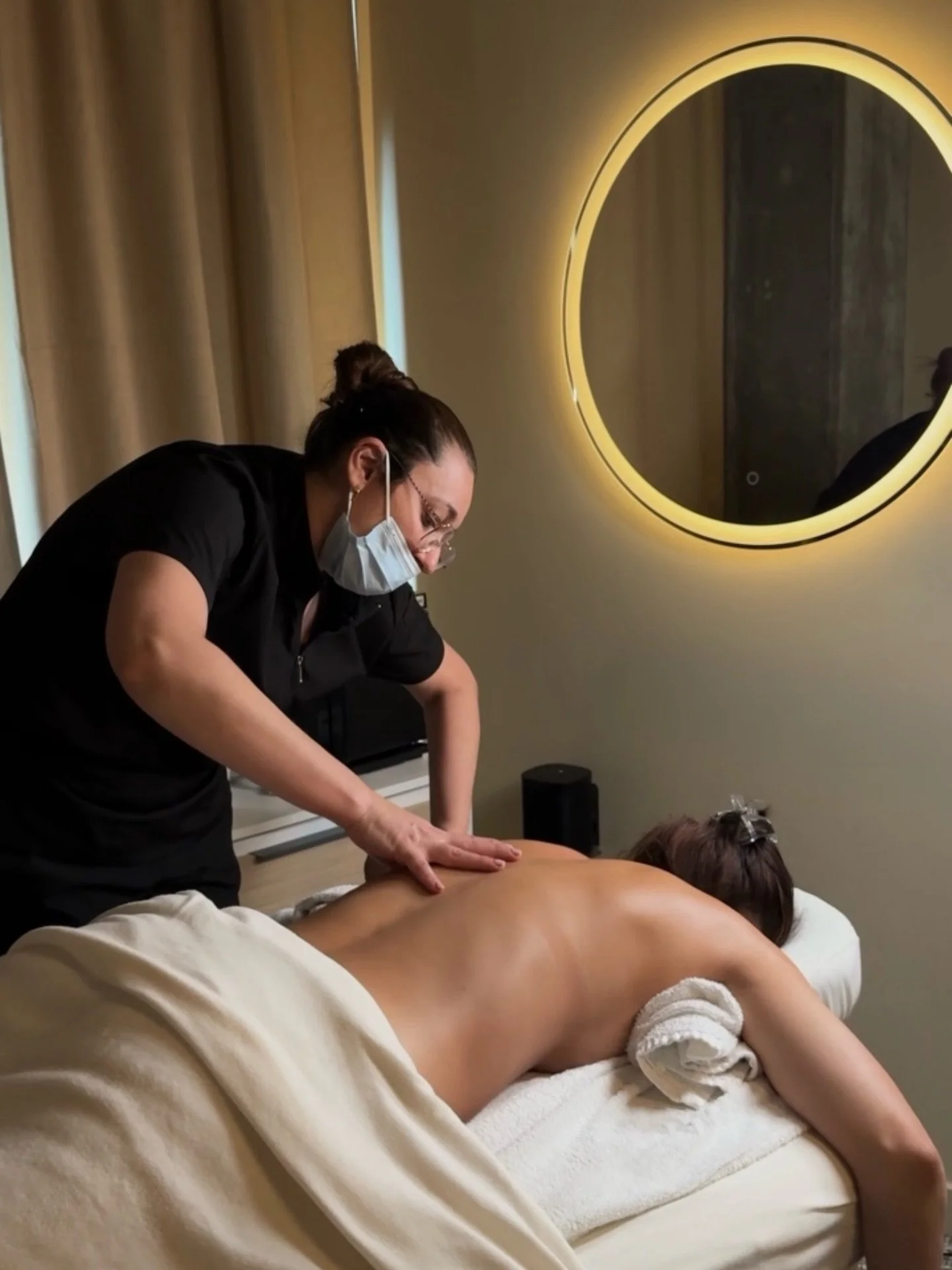
It catches you off guard every time.
You're finally relaxed, face down, breathing slowly. The therapist finds that tight spot between your shoulder blades and presses in. Then your muscle just... jumps. A little flicker under the skin. Sometimes a bigger spasm. And you don't know if something went wrong or if that's just what healing feels like.
Muscle twitching during massage is one of those things that happens to almost everyone and almost nobody talks about.
But once you understand it, you'll stop bracing against it and start recognizing it for what it is: your tissue finally doing something it's been trying to do for a long time.
What Muscle Twitching During Massage Means
It's called a Local Twitch Response. When a massage therapist applies sustained pressure to a tight, hypersensitive bundle of muscle fibers called a trigger point, the nervous system responds with a rapid, involuntary contraction. That flicker you feel. That's it.
A trigger point isn't just a sore spot. It's a small section of muscle that's been locked in a contracted state, sometimes for months, sometimes much longer. The fibers there aren't resting. They're gripping. And they've been doing it so quietly and consistently that you stopped noticing the tension long ago.
When the therapist finds that point and holds it, the nervous system finally registers the pressure. The twitch is its response. Brief, sharp, involuntary. And in a clinical sense, exactly what you want.
Why Back Muscles Twitch During Massage
The muscles along the spine work constantly. Not dramatically, not all at once, just relentlessly. They hold posture, absorb stress, compensate when something else isn't pulling its weight. By the time most people lie down on a massage table, those muscles have been quietly overworking for years.
A few things that tend to accumulate tension there over time:
Long hours at a desk, especially with the head carried slightly forward
Stress that lives in the shoulders before it lives anywhere else
Old injuries that healed structurally but left the surrounding tissue guarded
Repetitive movement on one side of the body, gym, carrying, even sleeping positions
When the therapist works into those layers, the back responds. Multiple trigger points sit close together, and as each one releases, the tissue around it shifts. Body twitching during massage in the back isn't unusual. It's almost expected.
What Are Massage Knots
"Knots" is the word people use, and it's not wrong exactly, it just doesn't capture the whole thing. What a therapist feels under their hands is usually a combination of contracted muscle fibers and restricted fascia, the connective tissue that wraps around each muscle like a casing.
When fascia gets dehydrated or compressed, it binds. The area feels dense, slightly warmer than surrounding tissue, and tender under pressure. But the real indicator of an active trigger point isn't the local soreness. It's what happens somewhere else.
The therapist presses into your upper trap and you feel it behind your eye. They find a spot near your shoulder blade and it pulses down your arm. That's referred pain during massage, and it's one of the more surprising things the body does. Trigger points have predictable referral patterns. The ache you've been carrying in a completely different area, the mystery headache, the hip that never fully loosens, those often have an origin point that's nowhere near where you feel them.
Treating the source tends to quiet both.
Sometimes the Twitch Is Just Your Nervous System Exhaling
Not every muscle spasm during a massage comes from a trigger point. Some of it is simpler than that.
Most people arrive at a massage table already running hot. The nervous system has been in a low-grade alert state for so long that real stillness feels unfamiliar. As the session pulls you toward genuine relaxation, the body occasionally protests the transition with a jerk, a twitch in the leg, a sudden flinch in the arm.
It's the same mechanism as the startle before sleep. The nervous system takes one last inventory before it lets go.
When this kind of twitching happens:
Usually early in the session, in the first ten to twenty minutes
Often in the legs and feet more than the back
More frequently in people who came in tense, rushed, or hadn't slept well
Nothing needs to be done about it. It settles. The body finds its rhythm. That's the whole point.
Muscle Twitch Vs Muscle Spasm During Massage
A twitch and a spasm can feel similar in the moment, but they are not exactly the same thing. One is usually quick and automatic. The other tends to last longer, feel stronger, and may need the therapist to adjust pressure.
Neither one means something has gone wrong by default. But they do give different information.
Muscle Twitch
A muscle twitch during massage is usually quick, small, and involuntary. It may feel like a little flicker under the skin, a jump beneath the therapist's hand, or a short pulse through the muscle.
This often happens when a tight or sensitive point is stimulated. The muscle reacts before you can think about it. You are not doing it on purpose, and you do not need to stop it.
Most of the time, the therapist simply notices it and keeps working with the tissue. The twitch can be a sign that the area is responsive, especially when the same spot has felt dense, tender, or guarded for a long time.
Muscle Spasm
A muscle spasm during massage is usually more intense. It can feel like the muscle is cramping, grabbing, or fighting back. Instead of a quick flicker, the contraction may hold for a few seconds or longer.
Spasms tend to happen when chronically shortened or guarded tissue receives more pressure than it is ready to accept. The muscle has been holding on for so long that it resists the change.
This is not a crisis, but it is communication. If a spasm feels sharp, painful, electric, or does not ease quickly, say something. A good therapist will shift immediately, using slower pressure, a different angle, or a gentler approach.
The goal is never to force the muscle to open. It is to give the tissue the right conditions to let go on its own.
What Happens After A Muscle Twitch Releases
Once a trigger point or tight area releases, the change is not always dramatic. Sometimes it is obvious. Sometimes it is quiet. But many people notice that the area feels different almost immediately.
That difference might feel like warmth, heaviness, soreness, or a strange empty space where the ache used to be.
Sudden Ease
After a twitch or release, the area may suddenly feel lighter. Some people feel warmth spreading through the muscle. Others feel a heavy, relaxed sensation, almost like the tissue finally stopped gripping.
There can also be a strange absence. The ache that had been sitting there in the background may feel quieter, even if it is not completely gone.
That is often the part people remember most. Not the twitch itself, but the moment after it, when the body realizes it does not need to hold quite as tightly.
Mild Soreness
The day or two after a deeper massage, mild soreness can happen. It should feel more like post-workout tenderness than sharp pain.
This does not automatically mean the massage was too much. It can simply mean the therapist worked into an area that had not been moving well. Tissue that has been guarded for a long time may feel sensitive after it is finally asked to soften.
Still, soreness should be manageable and temporary. If the pain feels sharp, worsening, or unusual, it is worth checking in instead of brushing it off.
Supporting The Release
The best thing to do after this kind of release is usually simple. Drink water, move gently, and give the body time to settle.
A short walk can help. Gentle range-of-motion movement can help. Rest can help too, especially if the session brought your nervous system down from a tense or overstimulated state.
What you do not need to do is aggressively stretch the area or chase the soreness. The point is not to force more change. The point is to help your body keep the ease it just found.
When To Speak Up
You should speak up during the session if the sensation becomes sharp, electric, cramping, or overwhelming. Massage can feel intense, but it should not feel like something you have to survive.
You should also check in after the session if soreness does not improve, if pain gets worse, or if something feels different in a way that concerns you.
A good massage therapist wants that feedback. It helps them understand how your body responds, adjust the next session, and choose the right pressure for the work your tissue is ready to receive.
FAQs
Is it normal to twitch that much?
Yes. Muscle twitching during massage is a common and expected response, especially in areas with accumulated tension. The more chronic the tightness, the more pronounced the response can be. It tends to calm down over a series of sessions as the tissue works through its layers.
Why does it hurt somewhere completely different from where you're pressing?
That's referred pain, and it's one of the most well-documented phenomena in myofascial therapy. Trigger points send pain signals along predictable neurological pathways. The therapist pressing on your neck and you feeling it near your temple is not coincidence. It's anatomy. Addressing the source usually resolves both.
Do I need deep tissue or will a relaxation massage help?
It depends on what the tissue needs that day. Therapeutic massage is designed to address specific patterns of tension and referred pain. Relaxation massage works with the nervous system, reduces cortisol, and allows the body to genuinely rest, which also helps muscle tension over time. Both have real value. The therapists at Griffintown work across both styles and will help you figure out what fits.
How many sessions before I notice a difference?
Some people feel significant change after one session. Deeper or more long-standing patterns usually take a series of appointments to fully shift. A package of four sessions is available if you want to commit to the process properly, at a rate that makes that easier to do.
Sometimes, Relief Starts With a Twitch
The twitches, the referred aches, the tension that stretches and foam rollers and rest just won't touch, none of it is random. The body keeps records. And it tends to tell the story clearly once someone takes the time to actually listen.
Therapeutic massage doesn't override that. It works with it. Each session is a conversation between your tissue and someone trained to understand what it's saying.
If you've been carrying something you can't quite locate, it might be worth lying down and letting the body show you where it lives. Sessions at Centre Thérapeutique Griffintown run 60, 90, or 120 minutes. Certified therapists, therapeutic and relaxation styles, a space that feels like rest.
Book when you're ready. The tension will still be there. But so will the way through it.